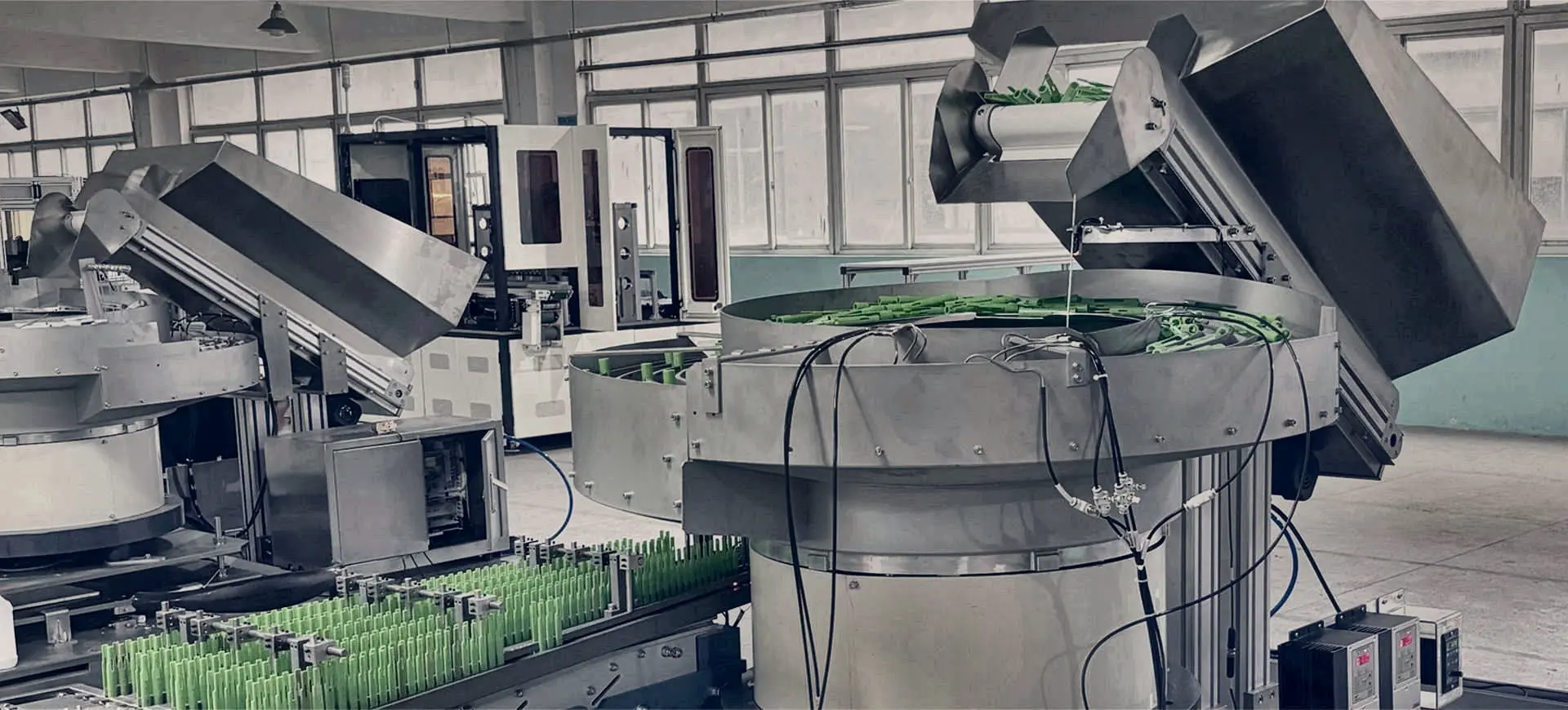
Technology overview · automated parts feeding
Component feeder systems for reliable automated production.
Compare vibratory bowl, centrifugal, step, flexible, linear, hopper and vision-guided component feeding systems for automated manufacturing.
Feeding principles
Compare the system options.
Each route has a different balance of dedication, throughput, surface contact, flexibility and integration complexity.
 System guide
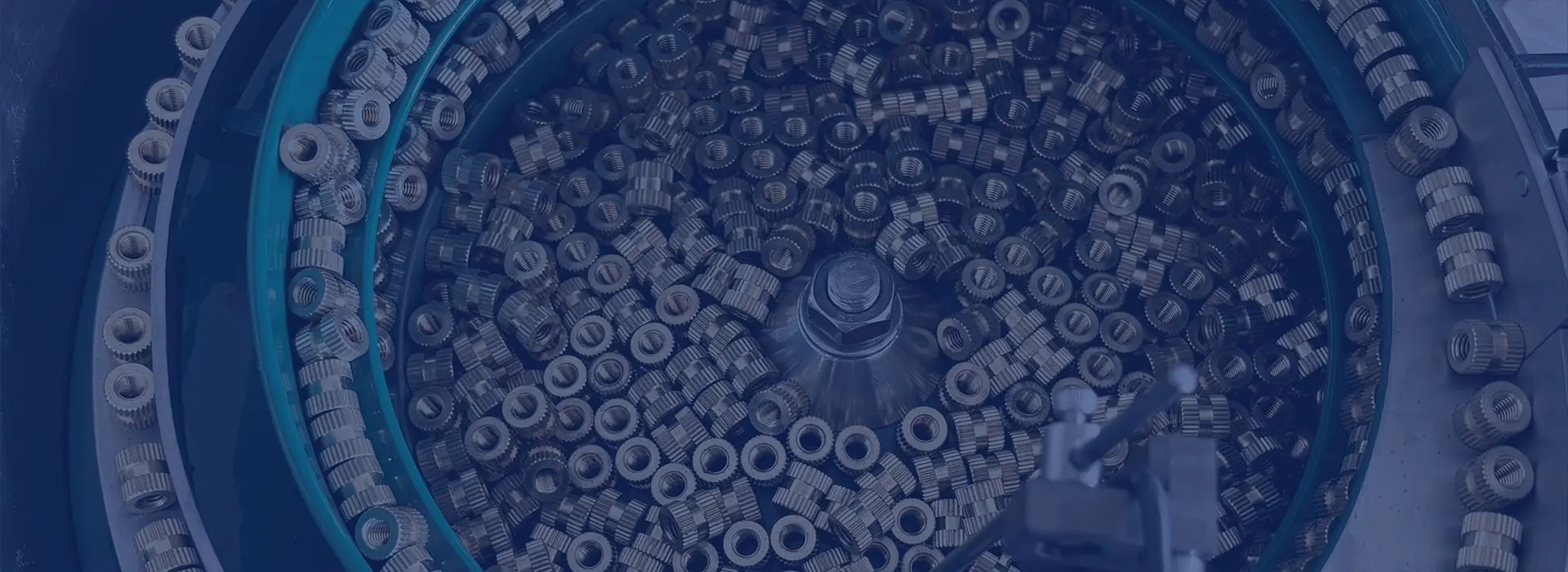
Vibratory bowl feeders for controlled component orientation.
A vibratory bowl feeder uses controlled vibration and application-specific track tooling to separate bulk parts, reject incorrect attitudes and deliver accepted components in a repeatable orientation.
Read system guide →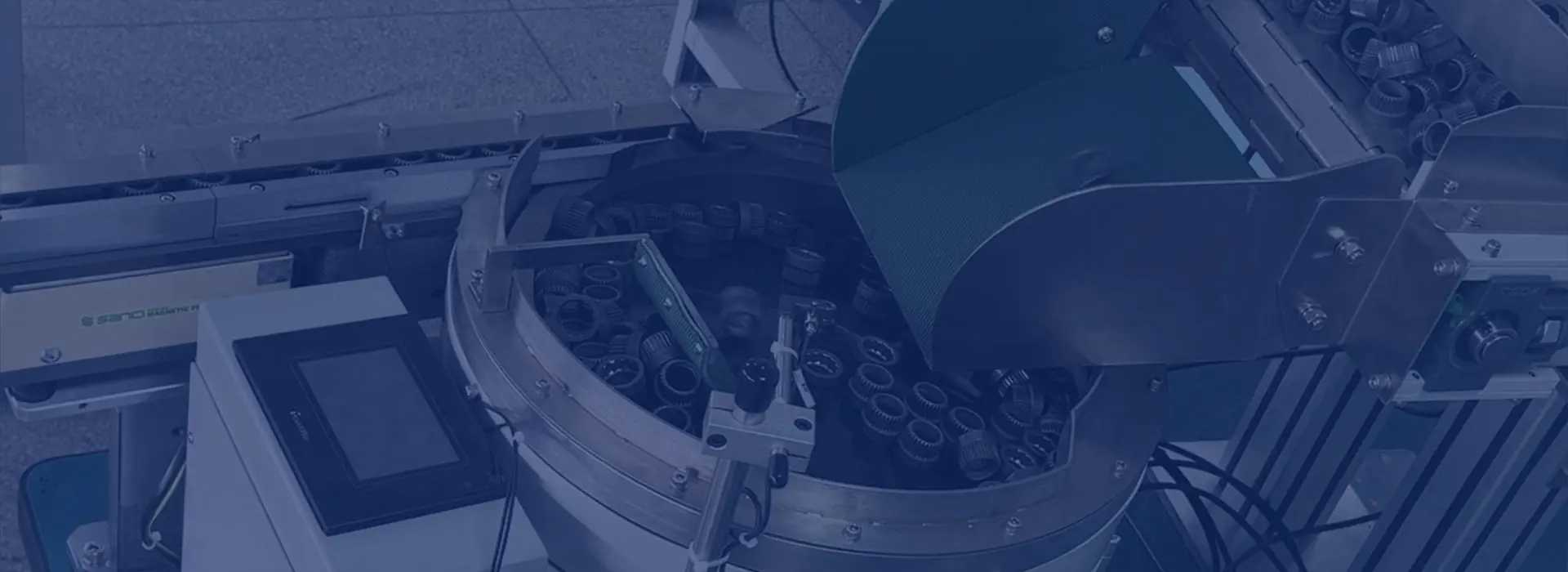 System guide
Centrifugal feeders for high-flow component presentation.
A centrifugal feeder uses controlled rotary motion to separate and present suitable robust components at high flow. Its real value is sustained accepted output after orientation, buffering and rejects.
Read system guide →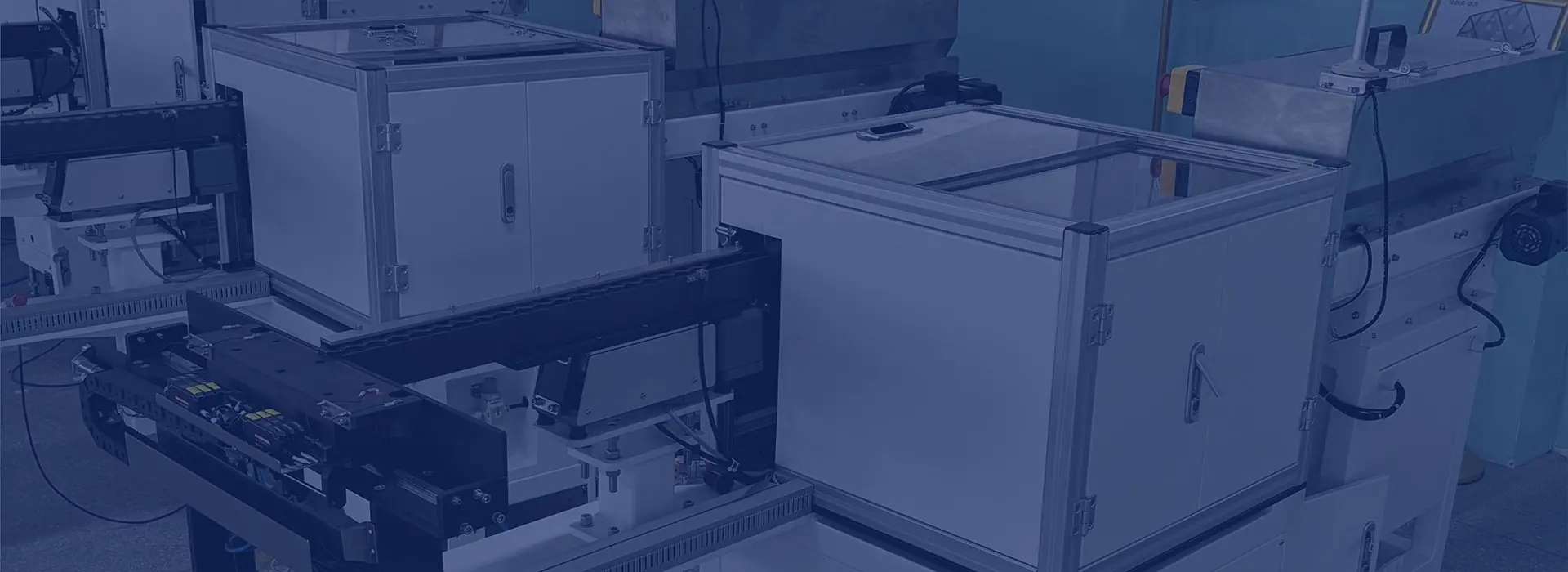 System guide
Step feeders for quiet, controlled component elevation.
A step feeder lifts components progressively from a low-level hopper onto an output rail. It reduces bowl vibration and loading height, while final orientation is completed by rails, tooling, sensors or vision.
Read system guide →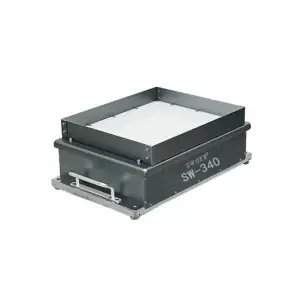 System guide
Flexible feeders for changing products and difficult geometries.
A flexible feeder redistributes parts on a controlled surface so a camera can locate pickable components and guide a robot. It is considered where format variety or difficult geometry makes dedicated tooling impractical.
Read system guide →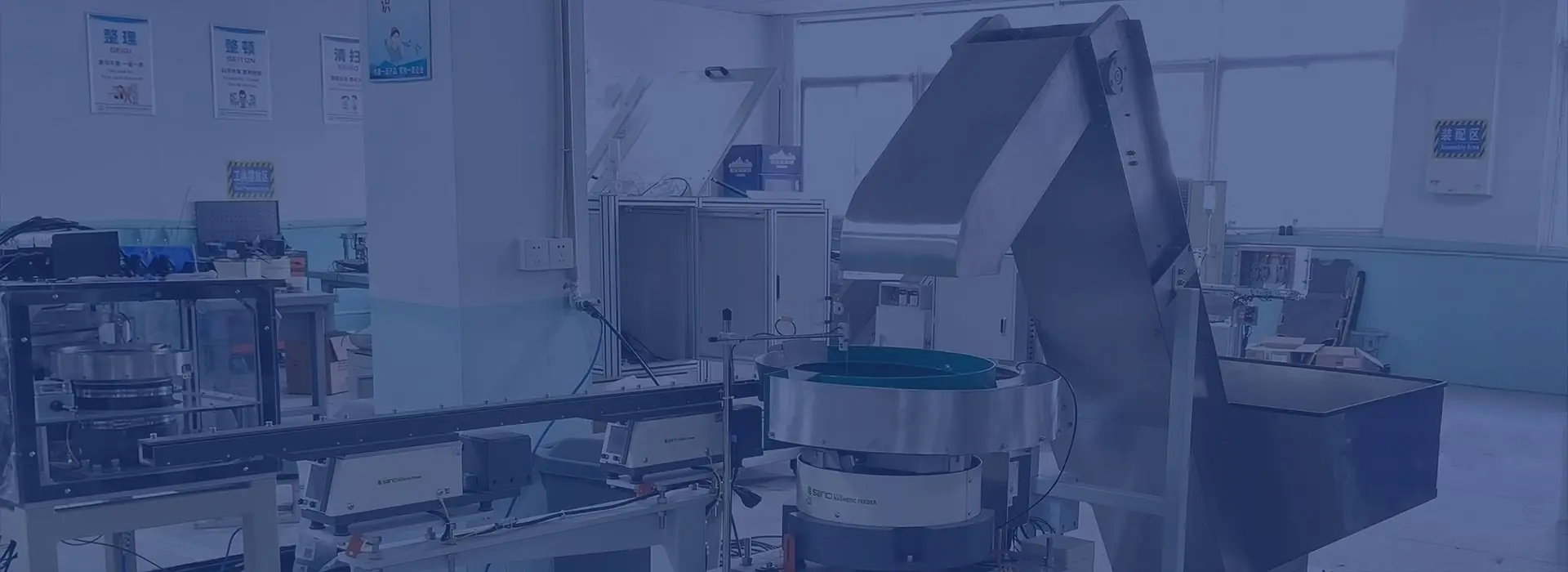 System guide
Hoppers, elevators and linear feeders for a complete feed path.
Hoppers and elevators provide controlled replenishment; linear feeders transport and buffer oriented parts; escapements release one accepted component when the machine calls.
Read system guide →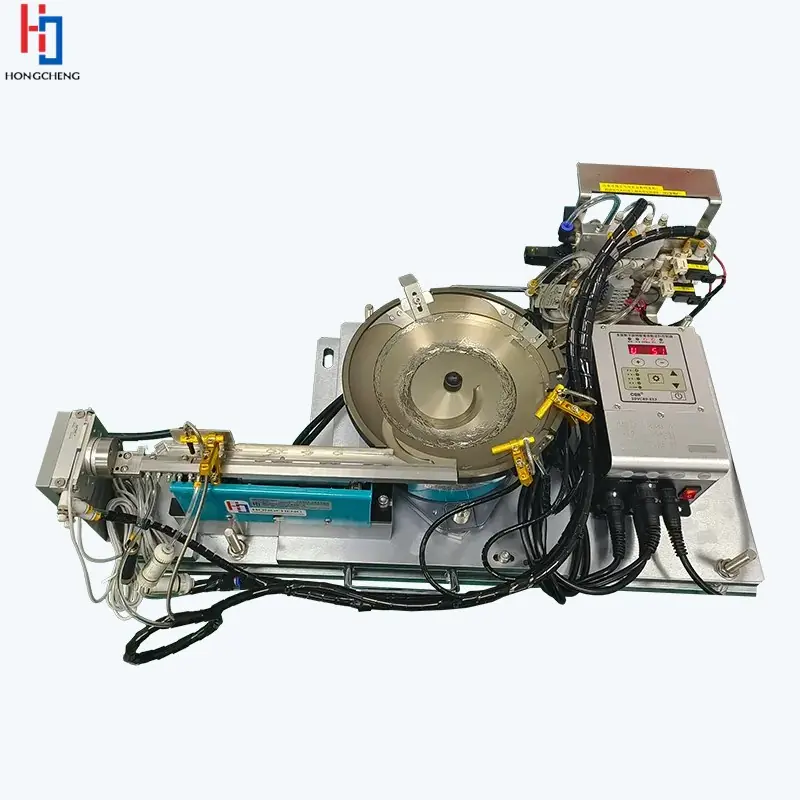 System guide
Vision-guided feeding that verifies the part before hand-off.
Vision-guided feeding combines stable part presentation, controlled lighting, cameras, image processing and reject or robot logic. It is most reliable when the inspection and feed path are designed together.
Read system guide →Plan the complete feed path
Rate, difficult behaviour and the final hand-off.
Use the rate and buffer planner to prepare the demand brief. If parts tangle, nest, stick or mark, start with the behaviour-led difficult-parts guide before selecting the feeder principle.
Straight answers
Common component-feeding questions.
Final suitability and performance are confirmed against the actual part and agreed trial criteria.
Which component feeder is best for my part?+
The choice depends on geometry, centre of gravity, friction, tangling, surface sensitivity, required orientation, format range, sustained rate and the downstream hand-off. Representative samples are the safest basis for selection.
What is the difference between a parts feeder and a complete feeding system?+
A feeder moves or orients parts. A complete system can also include bulk storage, replenishment, buffering, inspection, reject handling, escapement, controls, guarding and the mechanical hand-off to the next machine.
Can a feeder be integrated with an existing machine or robot?+
Yes, subject to an interface review. The scope may include outlet height, queue sensing, PLC or robot handshakes, buffer logic, guarding, reject handling and commissioning.
Start an application review
Send us the component. Get a clear starting recommendation.
Share photographs or drawings, variants, material and finish, required orientation, target sustained output and details of the receiving machine.