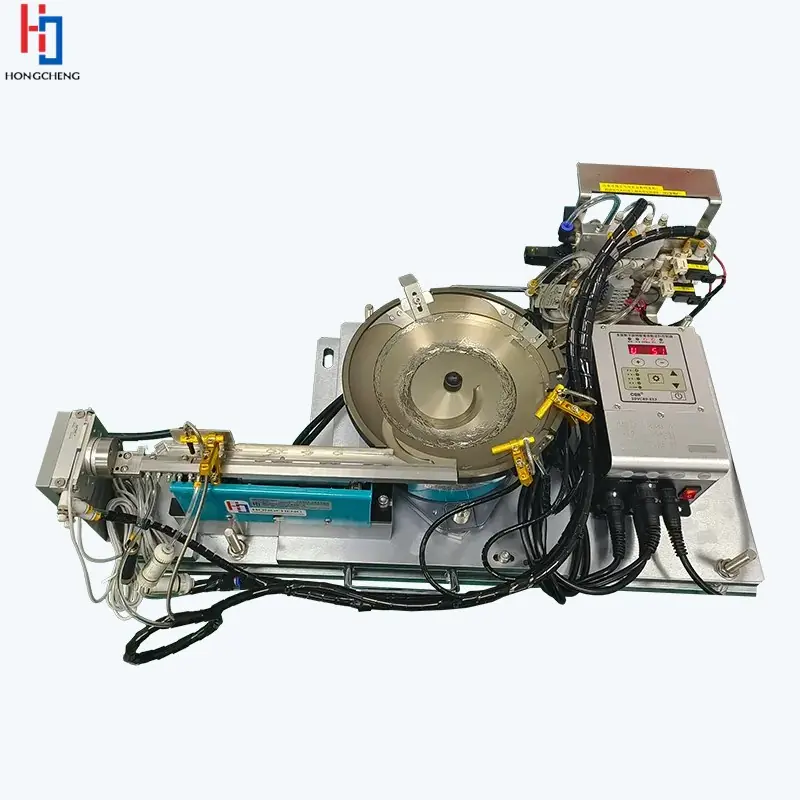
Metal bowl feeder with linear outfeed tooling, wiring and a control unit.

Feeding technology · application engineered

Vision-guided feeding that verifies the part before hand-off.

Vision-guided component feeding and inspection systems for orientation checks, classification, feature verification, rejection and robot presentation.

Direct answer

What this system does.

Vision-guided feeding combines stable part presentation, controlled lighting, cameras, image processing and reject or robot logic. It is most reliable when the inspection and feed path are designed together.

Where it can fit.

Selection starts with the component, accepted discharge condition and receiving process. This technology is commonly assessed for:

01

Orientation and rotational-position checks

02

Variant classification by visible features

03

Presence, geometry, colour or print checks

04

Robot picking from flexible presentation

Specify the complete path.

The sorter is only one stage. Bulk storage, metered replenishment, orientation, inspection, linear buffering, sensing and final release must work together under normal production conditions.

Performance evidence

Measure accepted output at the hand-off.

Use the trial and FAT method to record pose availability, false accepts, rejects and missed picks, then define robot and PLC states in the integration guide.

Trials should include representative variants, replenishment, recirculation and agreed intervention rules.

01

Define the component range

02

Agree orientation and datum

03

Set sustained rate and duration

04

Include the machine interface

Straight answers

Common component-feeding questions.

Final suitability and performance are confirmed against the actual part and agreed trial criteria.

What can vision inspect on a fed component?+

Vision can assess features that are visible and repeatable under controlled lighting, such as orientation, presence, colour, print, selected dimensions and certain surface conditions.

Can a camera guarantee that every defect is detected?+

No inspection should be specified in vague terms. Defect type, size, contrast, location, sample variation, false reject limit and containment response must be defined and validated.

How are failed parts handled?+

Options include air rejection, gates, diverters, robot removal or stopping the process. Confirmation sensing and controlled reject containment can be added according to risk.

Start an application review

Send us the component. Get a clear starting recommendation.

Share photographs or drawings, variants, material and finish, required orientation, target sustained output and details of the receiving machine.

Call project team01844 617223