Direct answer
What this system does.
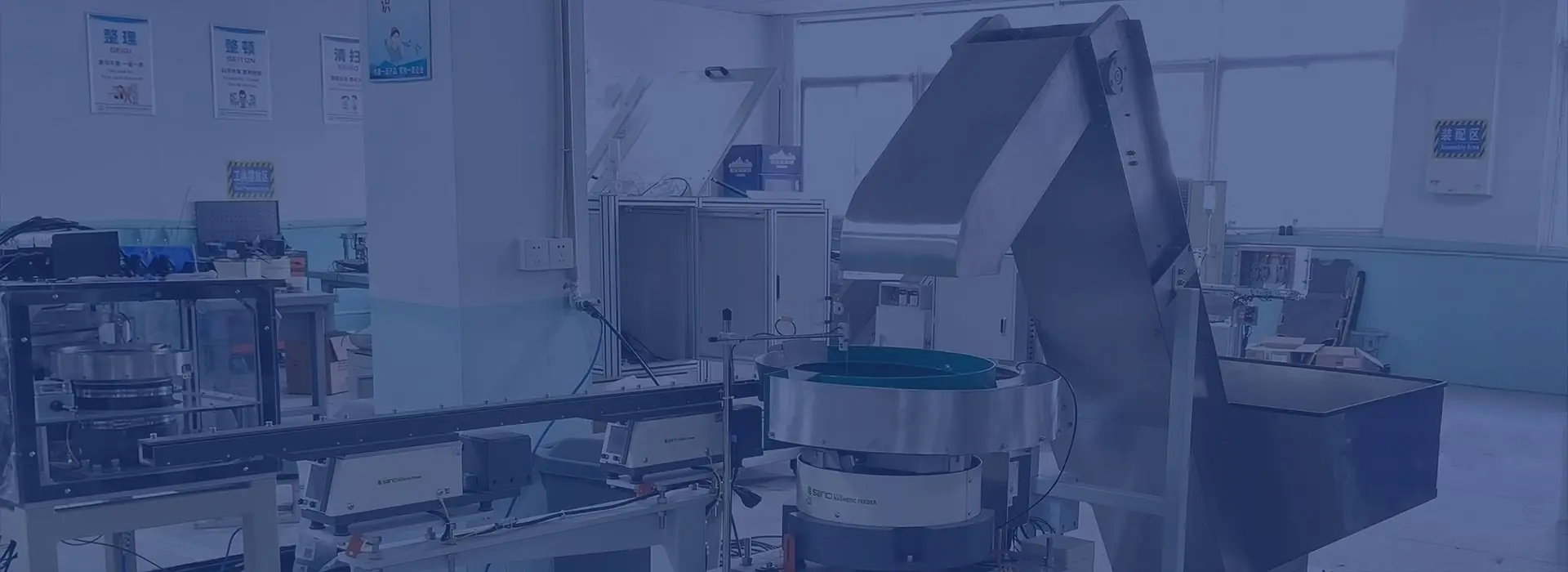
Hoppers and elevators provide controlled replenishment; linear feeders transport and buffer oriented parts; escapements release one accepted component when the machine calls.
Where it can fit.
Selection starts with the component, accepted discharge condition and receiving process. This technology is commonly assessed for:
Longer unattended running
Ergonomic low-level loading
Controlled queue and buffer capacity
On-demand one-part release
Specify the complete path.
The sorter is only one stage. Bulk storage, metered replenishment, orientation, inspection, linear buffering, sensing and final release must work together under normal production conditions.
Tracks, escapements and final nests
A linear track does not finish the job by itself. Selectors, rejects, queue control and an escapement or nest establish the final datum and release one accepted component when the downstream machine calls. The hand-off may be a gravity chute, dead nest, blow-feed point or robot pick position.
Define part-present sensing, queue pressure, back-up behaviour and recovery access before finalising the track. See Sortation Solutions' escapements and tooling overview for the wider application scope.