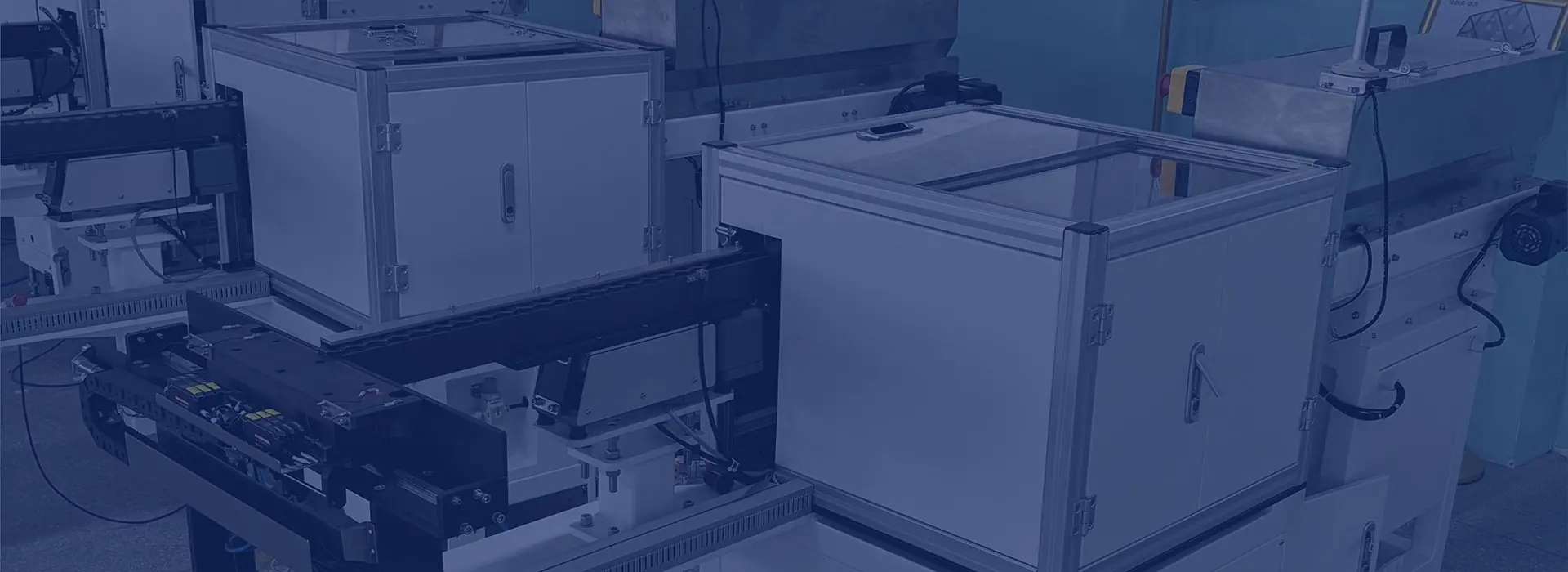
Enclosed feeding equipment with linear tracks and control panels.

Feeding technology · application engineered

Step feeders for quiet, controlled component elevation.

Industrial step feeders for controlled elevation and feeding of long, heavy, tangle-prone or noise-sensitive components into automated production systems.

Direct answer

What this system does.

A step feeder lifts components progressively from a low-level hopper onto an output rail. It reduces bowl vibration and loading height, while final orientation is completed by rails, tooling, sensors or vision.

Where it can fit.

Selection starts with the component, accepted discharge condition and receiving process. This technology is commonly assessed for:

01

Long or heavier components

02

Parts that tangle in deep bulk

03

Noise-sensitive production areas

04

Applications needing low-level loading

Specify the complete path.

The sorter is only one stage. Bulk storage, metered replenishment, orientation, inspection, linear buffering, sensing and final release must work together under normal production conditions.

Performance evidence

Measure accepted output at the hand-off.

Include representative oily, heavy or tangle-prone samples in the component trial, and define the final rail, sensing and machine call in the integration guide.

Trials should include representative variants, replenishment, recirculation and agreed intervention rules.

01

Define the component range

02

Agree orientation and datum

03

Set sustained rate and duration

04

Include the machine interface

Straight answers

Common component-feeding questions.

Final suitability and performance are confirmed against the actual part and agreed trial criteria.

What components are suited to a step feeder?+

Step feeders are often considered for longer, heavier, cylindrical or easily tangled parts. Suitability depends on how the component lifts, settles and transfers into the final orienting track.

Is a step feeder quieter than a vibratory bowl?+

The lifting principle can reduce bowl-related vibration and noise, but overall sound also depends on part-to-part contact, frame design, covers and required output.

Does a step feeder orient components by itself?+

The steps mainly meter and elevate parts. Rails, gravity, mechanical tooling, sensors or vision normally establish and verify the final presentation.

Start an application review

Send us the component. Get a clear starting recommendation.

Share photographs or drawings, variants, material and finish, required orientation, target sustained output and details of the receiving machine.

Call project team01844 617223