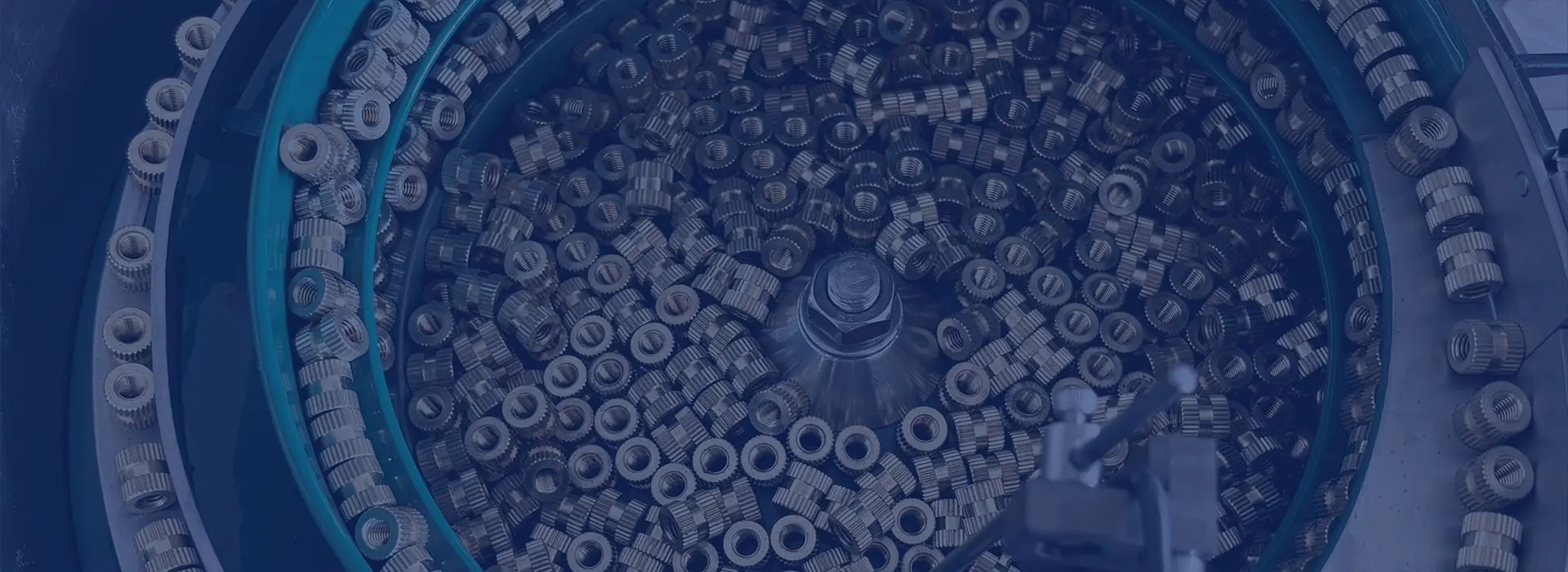
Threaded ring-shaped metal components in a circular feeder bowl.

Industry application · automated presentation

Medical component feeding with controlled contact and evidence.

Medical and pharmaceutical component feeding systems designed around cleanability, controlled contact, inspection, validation evidence and reliable presentation.

Typical components

Parts commonly assessed.

01

Device components

02

Caps and closures

03

Small moulded parts

04

Diagnostic and packaging parts

Engineer the reliable hand-off.

Medical and pharmaceutical component feeding systems designed around cleanability, controlled contact, inspection, validation evidence and reliable presentation. The complete scope may combine bulk storage, a bowl, centrifugal or step feeder, linear buffering, sensors, vision inspection, an escapement and the required PLC or robot signals.

Threaded ring-shaped metal components in a circular feeder bowl.

Information for selection

What to include in the brief.

  • Part drawings, photographs, dimensions, mass and finish
  • Every normal supplier, cavity, colour and material variant
  • Required orientation, datum, pitch and discharge height
  • Sustained rate, buffer demand and receiving-machine signals
  • Inspection, guarding, environment and access requirements

Record contact surfaces, cleaning assumptions, component variation and accepted presentation in the trial and FAT criteria; use vision guidance where presence or orientation verification is required.

Use the selection guide →

Straight answers

Common component-feeding questions.

Final suitability and performance are confirmed against the actual part and agreed trial criteria.

Can a component feeder be designed for a cleanroom?+

It can be designed around a stated cleanroom, cleaning and material requirement, but drives, covers, contact materials, lubricants, documentation and maintenance access must be specified for the exact environment.

Can soft or tacky medical components be separated reliably?+

Material tack, mould release, temperature, product depth and geometry all affect behaviour. Contact materials and alternative feeding principles should be compared with representative samples.

Who is responsible for process validation?+

The equipment supplier can provide agreed design, test and acceptance evidence. Process validation remains within the customer quality system, so responsibilities and documentation should be explicit in the project specification.

Start an application review

Turn the part requirement into a defined feeding project.

Share photographs or drawings, variants, material and finish, required orientation, target sustained output and details of the receiving machine.

Call project team01844 617223