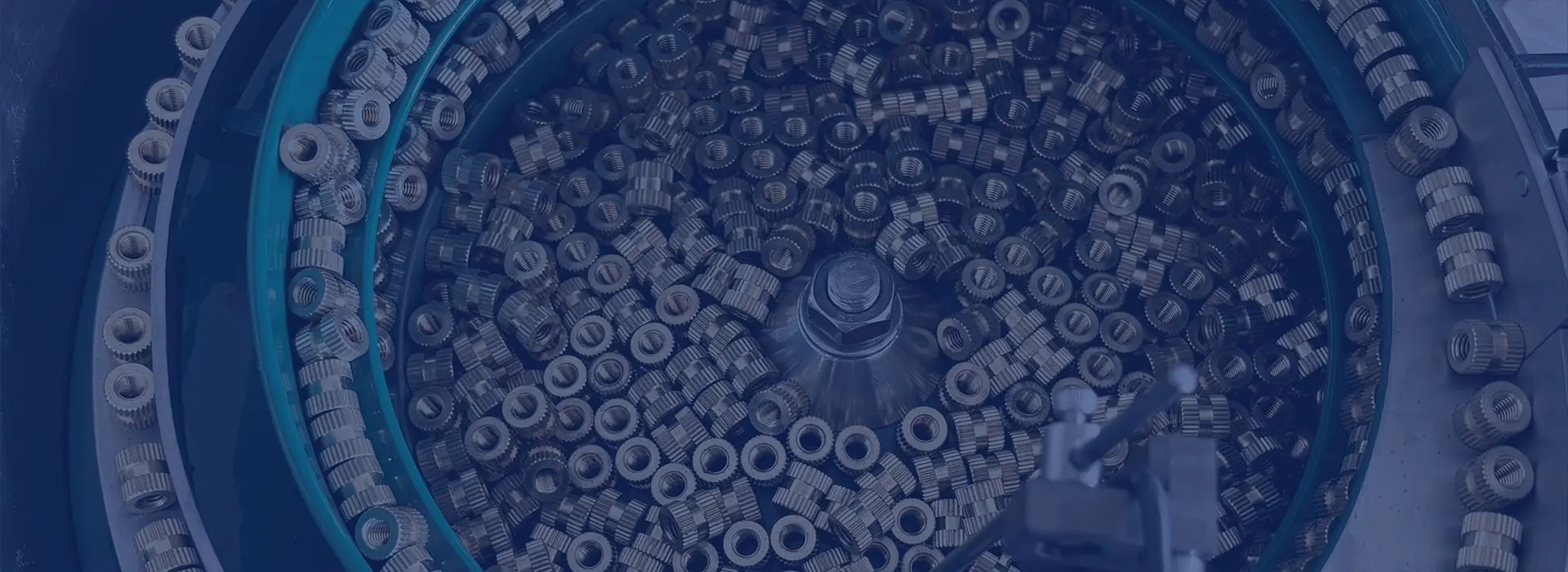
Threaded ring-shaped metal components in a circular feeder bowl.

Budget planning · quotation guide

Component feeder cost: what determines a reliable quotation?

There is no responsible fixed price for a part-specific feeder without reviewing the component, required output and machine interface.

Engineering guidance · reviewed 1 September 2026 · UK-wide project support

Direct answer

Component feeder cost is driven by application risk and supplied scope. The primary feeder is only one part of the budget; tooling, bulk loading, accumulation, inspection, escapement, controls, guarding, trials, documentation and commissioning can materially change the quotation.

Why a price list is rarely meaningful

Two parts of similar size can behave very differently. A stable moulding with a clear centre of gravity may orient simply, while a flexible, oily or nesting component may require additional separation, recirculation, sensing and trials. Required rate and the precision of the hand-off also influence engineering time.

SCOPE

Standalone feeder or complete integrated feed path.

TOOLING

Part-specific orientation, rejects, chutes and escapement.

CONTROL

Sensors, PLC, recipes, robot or machine handshake.

EVIDENCE

Trials, FAT criteria, documentation and site support.

Compare quotations on the same boundary

A low feeder-only price and a complete-system price are not comparable. Ask each supplier to identify included hoppers, stands, control panels, guarding, change parts, testing, delivery, installation, commissioning, training and spares.

Total cost of ownership

Budget for operator loading, format change time, cleaning, wear tooling, sensor replacement, spares and support. The cheapest initial route can become expensive if it causes marking, jams, frequent manual intervention or lost output.

Repair, retool or replace?

An existing component feeder may need service, a new lining or coating, part-specific retooling, controls replacement or complete renewal. Compare the cause of the current loss, remaining mechanical condition, availability of spares, changed component range and integration risk before choosing the lowest-cost lifecycle route.

RouteConsider whenConfirm before approval
Service or refurbishThe application is unchanged and wear, contamination, loose components or obsolete minor parts are the main issue.Inspection findings, included replacement parts and post-service acceptance test.
RetoolThe feeder base remains suitable but the part, orientation or hand-off has changed.Representative samples, tooling boundary, rate evidence and residual limitations.
ReplaceCondition, performance, safety, format range or integration requirements exceed a sensible retrofit.Complete supplied scope, trials, spares, commissioning and ownership cost.

For authoritative service scope, see feeder servicing, repairs and refurbishment and feeder retooling and spares.

How to obtain a firmer quotation

Send representative samples, part data, all variants, required orientation, target sustained output, line drawings, available services and an interface description. Where risk remains, agree a paid or project-stage trial before freezing the final scope.

Specification detail

Main component feeder cost drivers.

AreaWhat to defineWhy it matters
Part behaviourTangling, nesting, marking, static, oil and variation.May require more tooling, control and trial work.
OutputSustained rate and presentation accuracy.Influences track, buffer and inspection capacity.
FormatsNumber and range of components.Affects change tooling, adjustment or flexible feeding.
IntegrationMechanical, electrical, robot and PLC scope.Can be larger than the standalone feeder cost.
ComplianceGuarding, documentation, environment and validation.Changes design, materials and test evidence.

Engineering note: Final equipment suitability, output, safety, environmental performance and supplied scope must be established for the actual component, process and site.

Straight answers

Questions buyers and engineers ask.

These answers provide a practical starting point; representative parts and an agreed application review determine the final recommendation.

Can you quote a component feeder from a photograph?+

A photograph can support an initial discussion, but a dependable quotation normally needs dimensions, material, orientation, rate, line details and representative samples.

What should a component feeder quotation include?+

The quote should state the feeder, tooling, discharge, escapement, stand, bulk loading, controller, sensors, guarding, trials, documentation, delivery, installation, commissioning, training and spares that are included or excluded.

How long does a custom component feeder take?+

Lead time depends on application risk, sample availability, engineering scope, bought-out equipment, trials and the agreed approval process. Ask for a project programme tied to information release, trial, design approval, FAT and delivery rather than a generic promise.

When is retooling better than replacement?+

Retooling may be suitable when the feeder's mechanical condition, capacity and controls remain appropriate and the new component can be proven within the existing envelope. An inspection and representative trial should support the decision.

How can I reduce quotation uncertainty?+

Provide the complete part family, representative samples, required hand-off, realistic sustained output, line layout, services and a clear integration responsibility matrix.

Start an application review

Send the component. Define the hand-off. Compare the right feeder routes.

Share photographs or drawings, variants, material and finish, required orientation, target sustained output and details of the receiving machine.

Call project team01844 617223